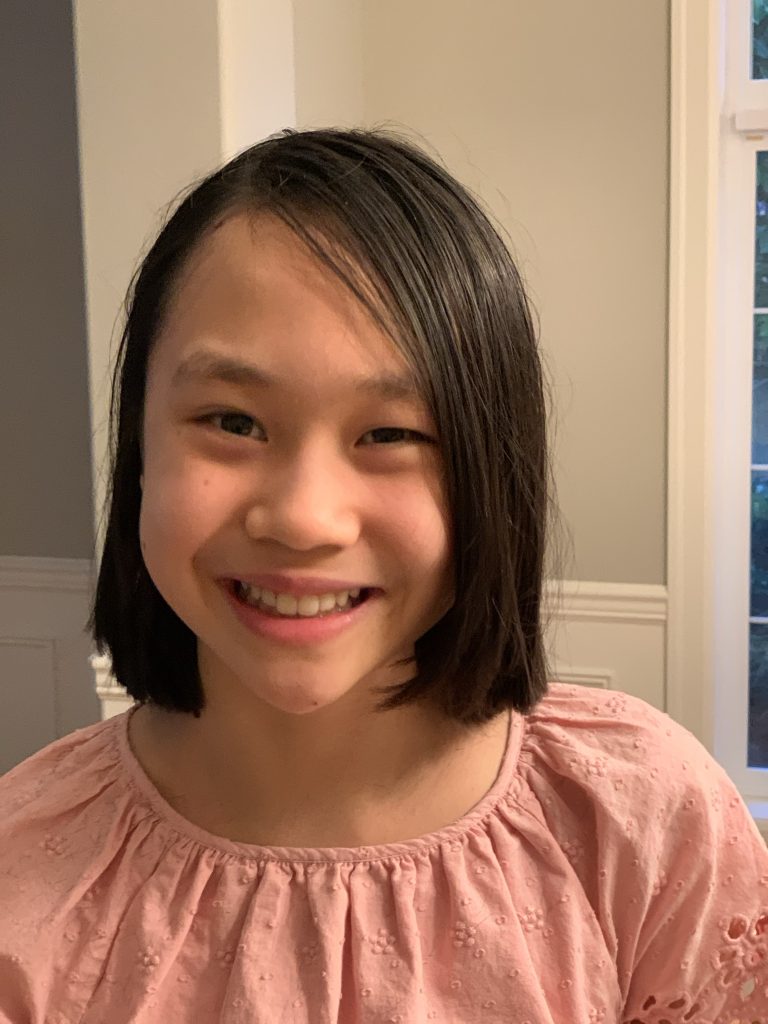
I talked, but I could hear my words filing into her ear and out of another like a string of music notes. She held her violin at playing position, but when I asked her to play something, she just looked at the brown mahogany that the instrument was made out of and didn’t say anything. I took out my violin and played a drawn out and mournful tune. She didn’t notice, or she didn’t care. I wasn’t sure which. I was impatient. I couldn’t teach music to a student who would only stand motionless. So, I sent her away a half hour early. She didn’t move, but she said the first thing I heard her say during this violin lesson: “I will leave when I want to.” She wasn’t being defiant. Or maybe she was, but she used her words and twisted them into an innocent tone. So, I let her stay. I let her stay and stare at her violin. I made stabs of conversation. She never responded. I tried playing a lively tune. She continued to look like stone. Out of the blue, she stood up. Still holding her violin, she went to the coat hanger and grabbed her brown cloak from off the golden hook. She set down her violin to fasten her cape. “Are you going?” I asked. She finished fastening her cape and grabbed her violin. It was eerie the silence that she made. Her footsteps didn’t make a sound. Her cape didn’t rustle. She opened the red doors, and quietly stepped outside my house. I stared at her. Something was intriguing. I knew that there was more to uncover to her. I felt that her silence held a secret. Maybe a deep loss or an unbearable pain. However, when her mother had dropped her off at my house for her first violin practice, she had maintained a stiff smile. That was probably for her talkative and overeager mother. But when her mother left, her lopsided smile diapered, and she took a seat in front of my desk. She swiveled the chair to face my direction, and she picked up her violin as if she were about to play. She never did, though, and then that’s when I began to speak even though I wasn’t sure if she was listening. I stared outside my window. She walked down the street that was wet from rain, her violin in hand. I didn’t know where she was going, but there was something peculiar about her footsteps. Unlike when she was in the house, her footsteps made an ominous and echoing sound. I could hear her footsteps from across the street. The rain wet the ringlets of her brown hair. Though it wasn’t the brown I saw in my house. It looked a different color. Though if it were a color, what color was it? It seemed to change with the wind. It was unpredictable. It was changing. She looked like the corpse of time. Or maybe she was time itself. Her figure suddenly changed from a 12 year old girl to an adult with a broad stance. She seemed to be aging by the minute. Then, she disappeared. Had she died? No, now she was a baby. An innocent and gentle baby. There was nothing more to her, but she kept on crawling down the street as she began aging again. However, there was something odd with the street. I had walked down it many times before, but something was different. It stretched out and into the rain. It was never ending. The cheery buildings turned a drab grey. I could still see the girl. She was walking, but instead of going farther down the street, she seemed not to be moving forward. Suddenly, she turned back into the girl in my house. When I was teaching her the violin. She was the 12 year old girl with brown hair that matched the color of her cape. I touched the window. Its smooth glass was now somewhat bumpy. Smoke billowed out of the girl’s cloak. The street turned to normal. The window became smooth. The girl disappeared. I never saw her again, but little did I know, she would change my life.
The Face of Time (writing workshop 5/22/21)